

AI and its role within purchase to pay is a hot topic. Whilst there is a wealth of information on the subject, we wanted to home in on the tangible benefits being achieved by AP teams today. At the P2P Advisory Forum last month, James Kearns from Kefron expertly guided the audience on the development of AI, the adoption of AI technologies and the impact seen by P2P functions who have already embarked on their AI journey. Here are some of his insights from the day.
Evolution of AI
Talk of AI is everywhere, and it can be daunting to understand how you can start to take advantage of the efficiency it offers, whilst overcoming some of the reservations you and your colleagues may naturally have towards this fast-moving technology. We’ll take a step back to look at what it means for your role and the products you are using, how software vendors are approaching AI and embedding it into their products, and ultimately, look at the benefits available to your team.
Challenging perceptions
As with all advances in technology, some people have readily adopted AI in their professional and personal lives to make things easier, appreciating the efficiency it provides, and fully embracing the ‘work smarter, not harder’ mantra. But it’s true to say that the successful adoption of AI is hampered by a negative perception, some consider it to be ‘cheating’ and there’s a fear that quality will be compromised. These thoughts, combined with the view that AI will take jobs away, makes people naturally more resistant. AI technologies have emerged so quickly that some people also feel anxious that they’re being left behind.
As sponsors, it’s important to alleviate the fear factor from the outset. AI technology certainly isn’t going away and will only become more prevalent. Gradually increasing knowledge within our teams through practical examples and communication of the benefits and long-term goals will help. Using Chat GPT to support the team with simple tasks, as a starting point, can demonstrate the ease with which the technology can be used. Demonstrate how easy it is to create meeting notes, how to template documents, or create an executive summary – maybe even capture someone’s interest by creating an itinerary for a holiday.
Gradually building confidence will help your team appreciate the benefits. Hours of research can be done in minutes, data can be analysed far quicker, all of which leaves time for you to be more productive and dedicate your expertise to more valuable tasks.
Where are we now and the pace of change
The pace of change is incredibly fast, with Chat GPT gaining over 1m users in just 5 days, and the accuracy of AI supported technologies is improving all the time. A recognisable example to demonstrate improvements in accuracy is ChatGPT and its attempts to pass the Bar exam. In 2021, Chat GPT failed the test. In 2022 it was in the bottom 10%, and by 2023 it was in the top 10%.
This increase in accuracy directly correlates to our own experience of Open AI at Kefron. Kefron’s engineering teams have trained OpenAI models to look for mandatory invoice data. At the outset it was picking up 50-60% of mandatory fields accurately and now that’s risen to over 99%.
AI performs better than humans
AI is now starting to out-perform humans. Whether it’s in handwriting, image recognition, reading comprehension or language comprehension, accuracy levels are higher for AI and will continue to improve.
This creates opportunities across a variety of specialist fields. Taking an example from a different sector, medical diagnostics, Google Health developed an AI system that was 10% more accurate than radiologists in identifying potentially dangerous anomalies in CT scans and MRIs. AI technology won’t take away the need for the doctor or radiographer to review results or anomalies, or to communicate compassionately with patients, but it does mean that patients get a diagnosis and access to treatment far quicker – ensuring medical professionals can spend time and use their skills to support those patients with the highest need.
Using technology to ease the manual burden, freeing team members to use their professional skills for higher value work is where the greatest opportunity resides. Taking us back to finance; an AI tool may flag that a supplier’s bank details look fraudulent, but the reality is that your AP team will have to verify that and make a decision.
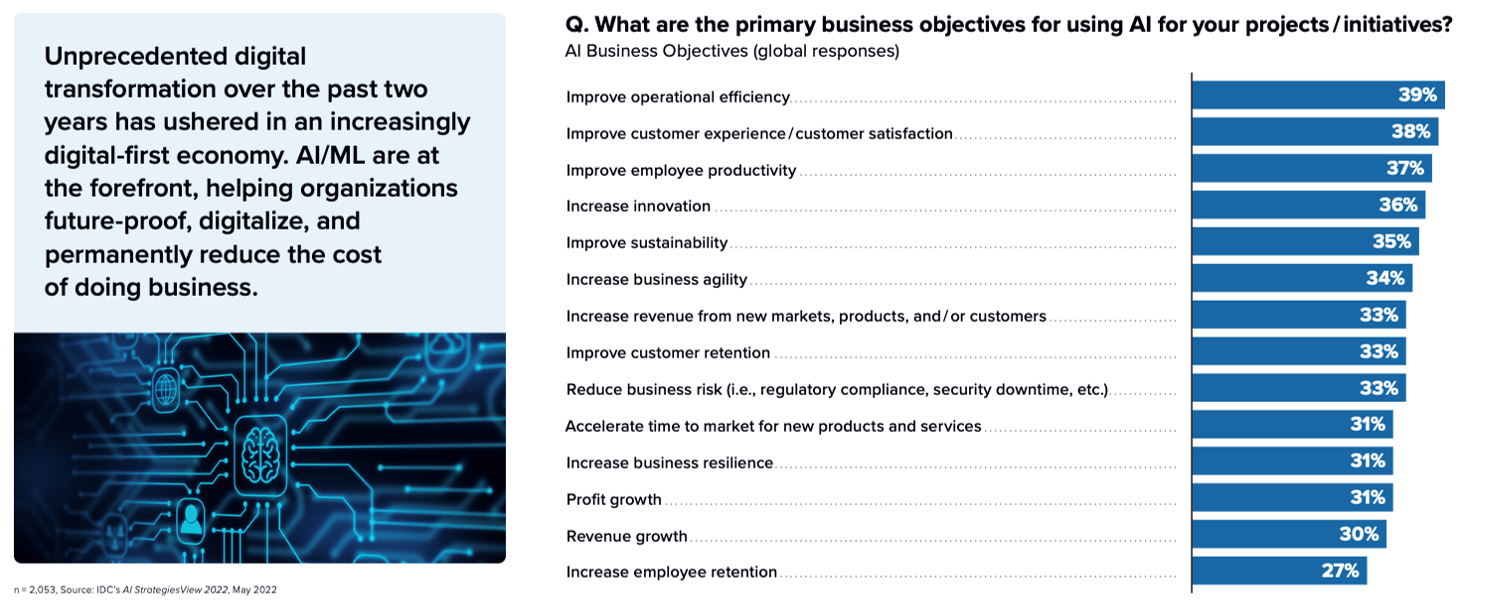
Indeed, when we look at the reasons driving AI adoption in processes, there’s a growing balance between pure efficiency gains and other objectives which drive organisational value.
How are providers incorporating AI?
Global spending on AI has increased dramatically and is projected to exceed $301 Billion by 2026. This represents a 5-year CAGR of 26.5%.
Whilst this rapid adoption drives greater software capabilities, and is certainly delivering results, there is still a need to exercise caution. Many vendors and buyers have projects underway to explore the benefits of AI, and it’s led to a trend where many vendors will be seeking to incorporate AI in their solutions, but there may yet be a disparity between what is claimed in marketing materials and what is delivered in the product itself.
As consumers you need to scrutinise vendors and really put them to the test. Understand what they mean when they talk about incorporating AI, and how it is applied. Don’t rely on pre-created demonstrations alone – ask to test on real data.
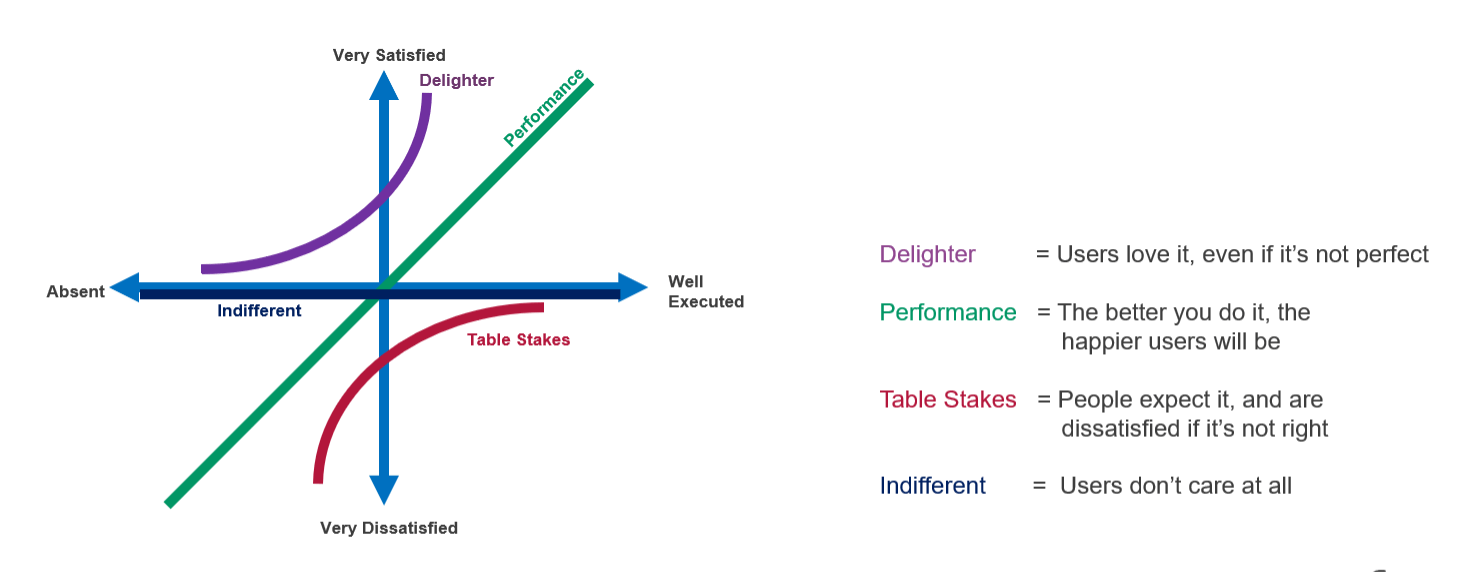
In terms of consumer expectation in how AI technologies will be incorporated within software applications, perhaps the easiest way to see the forces driving adoption is to look at the KAINO model. The model prioritises features on a product roadmap according to consumer experience. AI is perceived as a ‘delighter’, quickly becoming a ‘performance’ factor – but very soon it will move to ‘table stakes’, being fundamental to any product, and those not incorporating it seamlessly within their solutions will rapidly fall behind.
How will AI impact finance teams?
There are 4 key areas where AI directly benefits finance teams.
- Efficiency and automation
- Reduction in data entry by 99%
- Automation of manual tasks e.g. PO/GRN matching
- Decision making
- Data analytics on massive data sets
- Identify areas to capitalise on e.g. Early Payment Discounts
- Risk management
- Fraud detection and bank verification
- Credit risk checks
- Shift in skills
- Re-deployment from manual tasks to value-add activities
- 74% of UK orgs in 2024 investing in internal upskilling.
Efficiency and Automation
I recognise that what you really want to know is how public sector organisation are benefitting from AI and how you can best apply this technology in the immediate future. The number one priority in P2P processing is still to reduce manual data entry. That’s because the time saved is so impactful, and acts as a facilitator to the other benefits listed above. AI has made the extraction of fields more accurate, resulting in fewer exceptions and even greater time savings than we’ve previously been able to attain.
Let’s look at an example:
A typical council processes 4000 invoice documents per month. If we put them through the AI engine, and our team train the models to automatically extract all mandatory fields (typically 10-20 fields) then the following estimate would apply:
4,000 x 2 mins (the estimated time to manually extract the data) / 60 mins = 133 hours/ 7 hours = >19 Days saved
The councils we work with are seeing extraction rates in excess of 99% for mandatory fields.
What could your teams achieve with this time? Saving time (and money) on manual invoice entry and gaining readily available access to data, is the foundation that creates capacity within your team: facilitating improved decision making, enabling tools such as heightened fraud detection, and collaboration with internal and external stakeholders to address areas such as compliance and improved service delivery.
In summary:
- Encourage your teams to embrace AI to soften resistance and to demonstrate benefits
- Challenge every software vendor and look under the hood
- Think about the end goal – what would you do with one extra day a week in your team?
- Start small
Kefron and Oxygen Finance
Kefron have been working alongside Oxygen to support clients who have a requirement for e-invoicing or automation; speeding up processes so that suppliers can receive payment as early as possible, boosting their cash flow and maximising returns on client early payment programmes. If you’d like to find out more about how Kefron’s solutions can help your team, speak to your Client Success Manager.